Finding Your Dog’s Favorite Reward
Sep 4th 2026
The best reward in dog training is not always the most expensive treat or the newest toy. It is the thing your dog genuinely wants to work for.
Some dogs will do almost anything for a piece of freeze-dried liver. Others come alive for a fast game of tug, a tossed ball, or the chance to chase a favorite toy. Some dogs need calm enrichment after a training session, while others need a reward that lets them move, bite, chase, and celebrate.
Finding your dog’s favorite reward helps make training clearer, more productive, and more fun for both of you.
What Counts as a Reward?
In training, a reward is anything your dog values enough to want to repeat the behavior that earned it.
Food is a common reward because it is easy to carry, quick to deliver, and useful for lots of repetitions. But treats are not the only option. Depending on the dog, a reward might be:
- A small training treat
- A favorite tug toy
- A quick game of fetch
- A chance to chase
- A chew or stuffed toy
- Praise and attention
- Access to something the dog enjoys, such as sniffing, swimming, or greeting a familiar person
The important part is that the dog decides it is valuable. If a dog does not care about the reward, it will not do much to reinforce the behavior.
Build a Reward Hierarchy
Not every reward needs to have the same value. In fact, it is useful to have several reward options available.
Think of your dog’s rewards as a pay scale. Easy behavior in a quiet place may only require a small reward. New skills, difficult distractions, recall work, or competition-style training may call for something much more exciting.
A simple reward hierarchy might look like this:
|
Reward Level |
When to Use It |
Examples |
|---|---|---|
|
Low value |
Easy, familiar skills in a quiet environment |
Kibble, regular treats, calm praise |
|
Medium value |
Everyday walks, regular training, mild distractions |
Soft chews, favorite fetch toy, short tug game |
|
High value |
New behaviors, busy environments, recall work, hard training sessions |
Freeze-dried treats, special tug toy, favorite ball or toy |
A dog’s high-value reward may change depending on the day. A food-driven dog may prefer tug after a long day indoors. A ball-driven dog may choose food when tired, hot, or working in a tight space. That is why it helps to keep more than one option available.
Run a Simple Reward Test
The easiest way to learn what your dog likes is to let them choose.
Start at home in a quiet space. Pick two reward options, such as a soft treat and a freeze-dried treat, or a tug toy and a ball. Hold one item in each hand, keep your hands even, and let your dog choose.
Repeat the test several times while switching sides. If your dog repeatedly chooses one reward first, that item probably has more value.
Then compare the winner against another item. Over a few short rounds, you can start to build a clear picture of what motivates your dog.
Look for signs that a reward really matters to your dog:
- They choose it quickly.
- They show excitement when they see it.
- They stay focused on you because they want another chance to earn it.
- They are willing to leave the reward and re-engage in training.
- Their energy and effort increase when that reward is available.
Keep food and toy tests separate at first. A dog may prefer food in one situation and play in another, so there is no need to force a single answer.
Food Rewards for Fast, Focused Training
Food rewards are especially useful when teaching new skills. They are easy to portion, quick to deliver, and allow for lots of repetitions without stopping the flow of the session.
For most training, small treats work best. The dog should be able to eat the reward quickly and get back to work without losing focus.
Freeze-dried dog treats are a strong option for dogs that enjoy simple, high-value protein rewards. They are easy to carry and can often be broken into smaller pieces for training.
Soft chew dog treats are another useful choice for quick reinforcement. Their soft texture can help keep the pace moving during obedience work, puppy training, and everyday practice.
When choosing training treats, look for options that are:
- Easy to break into small pieces
- Easy for your dog to digest
- Low mess in a treat pouch
- Fast for your dog to eat
- Valuable enough to hold attention around distractions
Save the most exciting food rewards for the moments that need them most. If your dog gets freeze-dried treats all day at home, they may not feel as special during a difficult recall session or busy class.
Tug Rewards for Dogs That Love to Play
Tug is not just for sport dogs. A short, energetic tug session can be one of the best rewards for dogs that love movement, chasing, and gripping.
Tug toys can help build engagement and turn training into a game. They are especially useful for active dogs that lose interest in food but light up when a toy comes out.
Tug rewards work well for:
- Building enthusiasm in obedience training
- Rewarding recalls
- Agility foundation work
- Teaching engagement around distractions
- Giving high-energy dogs an appropriate outlet
- Creating a strong connection through play
Keep tug sessions short and exciting. Use a clear cue to begin the game and a clear release cue when it is time to return to work. Let your dog win sometimes, especially when you are building confidence.
For many dogs, the toy becomes more valuable when it only appears during training. Keep special training toys put away between sessions so they do not become just another item on the floor.
Fetch Rewards for Dogs That Love to Chase
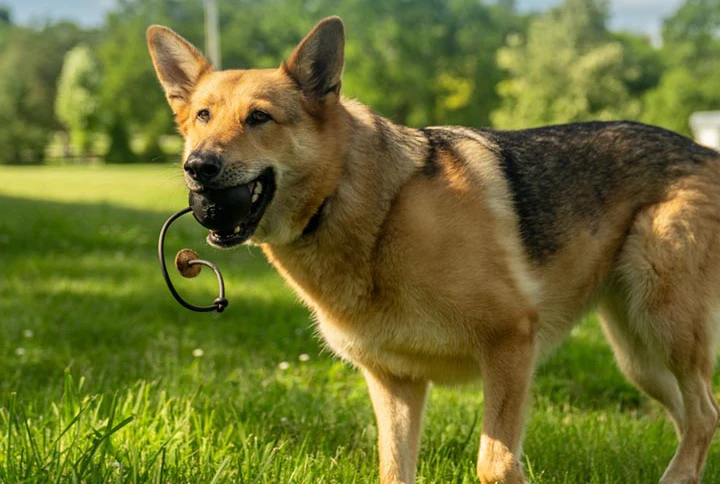
Some dogs would choose a ball over just about anything. For those dogs, a quick retrieve can be a powerful reward.
Fetch toys work especially well for dogs that love to chase, carry, and bring things back. A short toss can reward a great repetition without turning the whole training session into an hour-long game of fetch.
Fetch rewards can be useful for:
- Recall practice
- Agility and sport foundations
- Rewarding forward movement
- Outdoor obedience training
- Building excitement in dogs that enjoy movement
- Adding variety to a reward routine
Keep the throw short enough that your dog can quickly return to you. The goal is to reward the behavior, then get back into the next repetition while your dog is still engaged.
Chews and Stuffed Toys for Calm Rewards
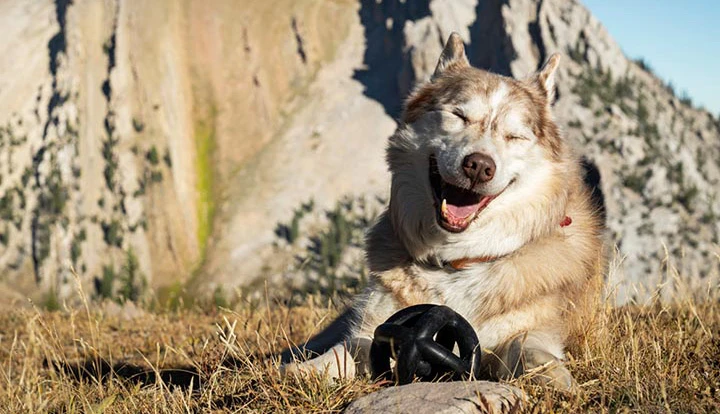
Not every reward needs to create more energy. Some of the best rewards help a dog settle down after a hard training session, during crate time, in a hotel room, or while people are busy around camp.
Chew toys give dogs an appropriate outlet for chewing and can help redirect boredom into something productive.
Interactive dog toys and dog toy fillers can turn a simple reward into a longer activity. Fillable toys are useful for teaching calm behavior because they encourage licking, chewing, and problem-solving rather than bouncing off the walls.
For dogs that enjoy longer-lasting edible rewards, dog bones and rawhide can be another option. Always choose chews that match your dog’s size and chewing style, and supervise your dog with a new or long-lasting chew.
Do Not Forget Plush Toys
Not every dog wants to tug hard or chase a ball. Some dogs love carrying, shaking, sniffing, or curling up with a soft toy.
Plush dog toys can be a good fit for gentler dogs, dogs that enjoy comforting items during travel, or dogs that prefer a lower-key kind of play.
A plush toy may not be the best reward for every high-energy training session, but it can still be valuable. If your dog lights up when they see a certain stuffed toy, that is useful information.
Always supervise dogs that tend to tear apart plush toys or swallow stuffing.
Make Rewards Work Better
Once you know what your dog likes, use that information strategically.
- Reward immediately after the behavior you want to reinforce.
- Use a consistent marker word, such as “yes,” or a clicker to tell your dog exactly what they did right.
- Match the value of the reward to the difficulty of the task.
- Keep training sessions short enough that your dog stays interested.
- Use small food rewards for frequent repetitions.
- Use toys in short, exciting bursts.
- Rotate rewards to keep your dog guessing and engaged.
- End the session while your dog still wants more.
Early in training, reward every correct repetition. Once the behavior becomes more reliable, you can begin mixing in different rewards and varying when they appear. That does not mean stopping rewards. It means keeping your dog engaged by making the paycheck worth working for.
Common Reward Mistakes
Even great rewards can lose value if they are not used thoughtfully.
A few common mistakes include:
- Using a reward the dog does not actually care about
- Asking for difficult work in a distracting place while offering low-value pay
- Giving treats that are too big or slow to eat
- Leaving a favorite training toy out all day
- Delivering the reward too late
- Training for so long that the dog becomes tired or frustrated
- Assuming a dog is not motivated when the environment is simply too difficult
If your dog suddenly stops caring about rewards they usually enjoy, take a step back. They may be tired, stressed, overexcited, too full, too hot, or unsure what you are asking. Make the task easier, reduce distractions, and help them find success again.
Let Your Dog Tell You What Works
The best reward system is flexible. A dog may love freeze-dried treats one day, tug the next, and a stuffed toy after a long adventure. Pay attention to what gets your dog engaged, focused, and eager to work again.
There is no single perfect reward for every dog. Build a lineup, test different options, and keep the best ones ready for the moments that matter.
Explore our training treats, tug toys, fetch toys, and interactive toys to find the rewards your dog will want to work for.